Top Nigerian Property Markets by ROI in 2026
Executive Summary: Nigeria’s real estate sector is now worth an estimated $2.61 trillion (≈₦14.8T) and contributes ~10.7% of GDP. Residential values are rising ~14% annually (up to 20–25% in Lagos/Abuja prime areas), and rental yields vary widely by city. Lagos leads with gross yields around 8–12% for typical apartments, while growing secondary cities like Ibadan can offer comparable yields (8–10%) at much lower prices. Abuja and Port Harcourt yield more modest returns (~5–8%), and northern markets like Kano average ~7–9%. This article analyzes each market’s price range, rental data, and risk factors, with examples from BaayRealty listings to illustrate entry points. We also summarize each city’s typical ROI, holding period, and recommend strategies for low-, medium-, and high-capital investors. (Data from Q4 2025–Q1 2026 listings and market reports.)
Methodology and Data Sources
This analysis combines recent listing data (Q4 2025–2026) from BaayRealty’s property shop and industry research on Nigerian real estate prices and rents. We prioritized BaayRealty listings as illustrative examples (with URLs) and cited official or industry sources for market metrics. Key sources include:
- BaayRealty market reports and guides: e.g. their 2026 passive-income guide, which compiles BambooRoutes and local data on yields and growth areas.
- AfricanVestor research: up-to-date market reports (2026) on Nigerian housing prices and rental yields, including tables of average prices and rents by city and neighborhood.
- Expert commentary: Industry blogs (e.g. thinkMint) and news pieces for context on high-growth areas.
- Official figures: Statistics on sector size (e.g. real estate’s $2.61T market value, GDP share).
Where exact recent data was unavailable, we made transparent assumptions (e.g. extrapolating yields from adjacent data) and show simple calculations. All data points are cited.
Lagos ROI Analysis
Overview: Lagos remains Nigeria’s most liquid (and priciest) real estate market. Demand from residents and diaspora keeps values high. The typical Lagos apartment price is well above the national average (≈₦70M) – for example, a 4-bedroom duplex with penthouse in Ajah is listed at ₦150M, and a 4-bed triplex off-plan in Lekki at ₦230M. Prime areas like Ikoyi/VI reach ₦100M–₦300M+ for luxury units. Annual price appreciation in 2025–26 has been ~15–30% in top submarkets.
Rental yields: Lagos leads in gross rental yield.
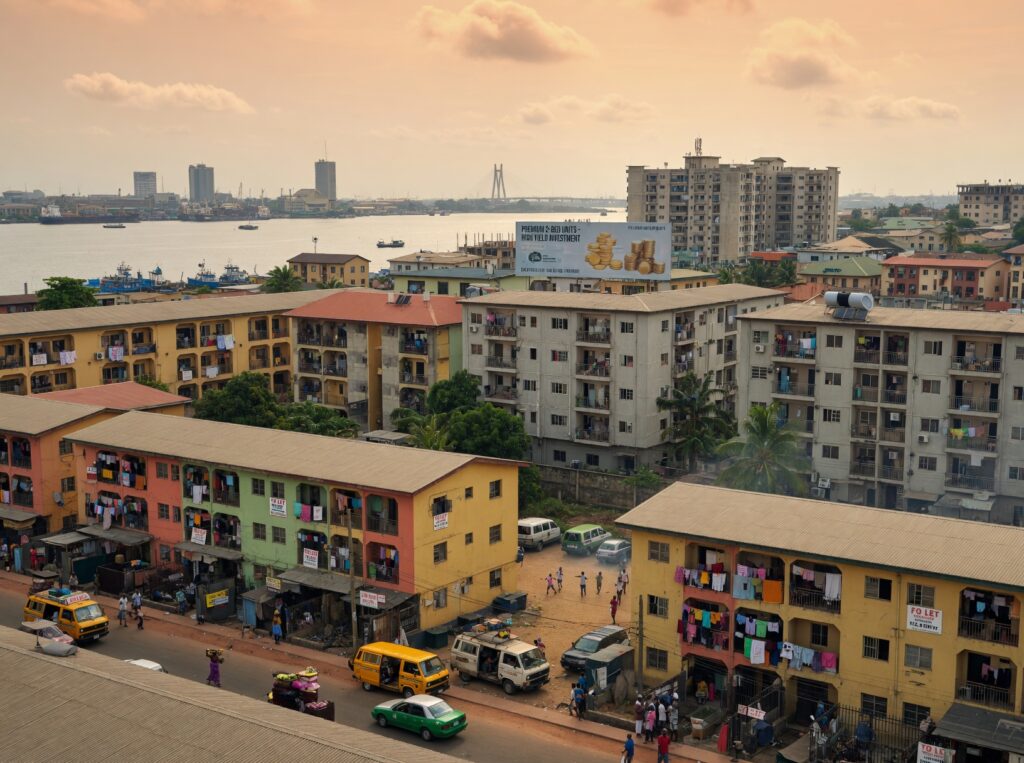
Typical long-term yields for 1–2 BR apartments in Mainland/Lekki are ~8–10%, and short-lets can exceed 12–15%. (For example, Surulere and Yaba 1BR yields ~11%.) The Baay guide notes Lagos yields 8–15%+ in high-demand areas. From listings: a 4BR duplex at ₦150M might rent ~₦12M/yr for 8% yield, whereas a smaller unit like a 2BR in Yaba (₦38M) rents ~₦4.2M/yr for 11%.
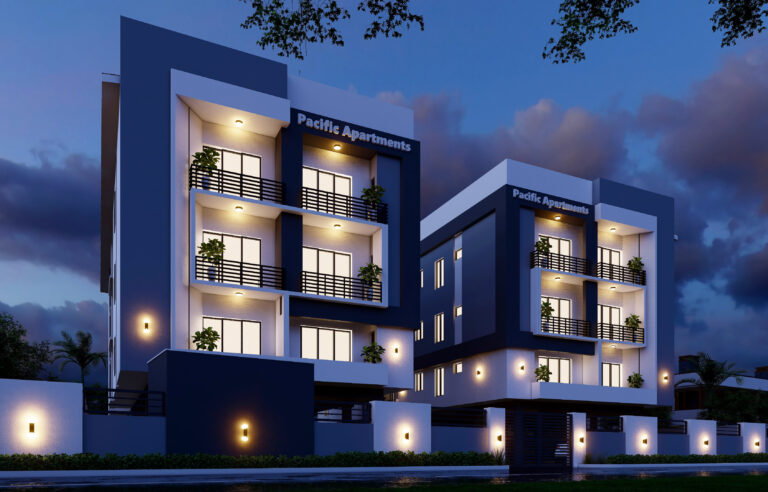
Capital range: Mid-market Lagos properties run ~₦50–200M. For example, Baay’s Pacific Court, Okun Ajah (Lagos): 4BR duplex+PH at ₦150,000,000. Eden Residence (Lekki): off-plan 4BR triplex at ₦230,000,000. High-end terrace homes (Magodo, VI) can exceed ₦300M. Entry-level Lagos mainland (2BR in Yaba/Surulere) appear around ₦30–70M.
Holding period and risk: Lagos often requires a medium-to-long term hold (5+ years). Currency volatility (naira) can boost dollar-value gains but also deter local buyers. Rental stability is generally high in Lagos, but high service charges and potential vacancy (for top-end units) are risks. Electricity and water supply issues can also affect net returns.
Investor profile: Best for deep-pocket or diaspora investors seeking a stable, high-appreciation market. High net-worth domestic buyers, institutional investors, or foreign Nigerians typically buy here. The ROI potential is highest among Nigerian cities, but so is capital requirement.
Example Listings (Lagos): • Pacific Court, Okun Ajah (Lagos) – 4BR fully-finished duplex with penthouse, Lekki Phase 2, ₦150M. • Eden Residence (Lekki) – off-plan 4BR triplex near Lekki Conservation Centre, ₦230M. • Gorge View Court, Magodo Phase 2 – 4BR terrace triplex, ₦300M. (These illustrate Lagos entry points from mid-20M/bedroom to high-end estates.)
Abuja ROI Analysis
Overview: Nigeria’s federal capital has a strong government/expatriate rental market. High-income neighborhoods (Maitama, Asokoro, Wuse) drive prices. Abuja prices are lower than Lagos but still high regionally. AfricanVestor reports average Abuja home ≈₦50–80M, with Abuja prime submarkets up ~15–25% in 2025.
Rental yields: Gross yields in Abuja are moderate. The Baay guide cites 5–8% for “mid-town” and “family” rentals. The Africanvestor data shows 1BR yields ~6–7% in Jabi (6.7% for ₦45M purchase) and ~6% in Asokoro/GRA1 (6.0% at ₦90M). Higher-end GRA areas yield lower (4–5%). Overall, Abuja’s yield band (~5–7%) is below Lagos’s.
Capital range: Middle-upper: 2BR apartments often ₦30–60M, 4BR houses ₦100M+. For example, a 1BR apt in Asokoro ~₦90M (yield ~6% at ₦0.45M rent). A 2BR in Jabi ~₦85M (yield ~5.6% at ₦0.4M rent). Large estates (Maitama 3BR ~₦260M) are for institutional or high-net-worth.
Holding period and risk: Abuja is relatively stable. Rental demand (govt, NGOs, oil companies) is steady but tied to fiscal budgets. Like Lagos, the naira risk affects actual returns. Construction costs and mortgage rates are high (~25–30%), meaning most deals are cash. Expect medium-term hold (5+ years) for appreciation, but rentals generally affordable for renters.
Investor profile: Good for moderate-capital investors (₦20–60M). Suitable for those targeting government/expat tenants (e.g. civil servants, contractors). Less price volatility than Lagos, but also lower yields. Entry-level buyers (young couples, public servants) fit here.
Example Listings (Abuja): No specific BaayRealty listings were found for Abuja. (In practice, investors would look at off-plan estates in outskirts like Lugbe or Gwarinpa for better yields.) For context: thinkMint notes areas like Lugbe as affordable Abuja rental corridors (good for mid-income tenants).
Port Harcourt ROI Analysis
Overview: Port Harcourt’s market is driven by the oil/gas sector. Prices dropped after the 2014 crash but have stabilized. Typical mid-market homes range ₦20–50M (higher in GRA estates). The AfricanVestor “areas” report lists PH neighborhoods like Woji/Rumuodara as affordable (~₦800k–₦1.8M/sqm).
Rental yields: Yields in Port Harcourt tend to be 5–6%. The Baay data suggests ~5–8% for high-end GRA rentals. AfricanVestor reports, for example, GRA Phase 2 1BR apt at ₦45M rent ₦0.2M/mo (5.3% yield), Trans Amadi industrial district 1BR yield ~5.1%. Executive apartments in PH often meet corporate budgets (rents fully paid by employers), but rental turnover can be high if oil projects pause.
Capital range: Mid-lower: 3BR houses can be found from ₦30–60M. A serviced 2BR apartment might be ₦20–40M. Example: a small 1BR in Trans Amadi ~₦28M (yield ~5.1% at ₦0.12M rent).
Holding period and risk: PH is more cyclical. A downturn in oil prices can lead to vacancies and falling rents. Generally, a 3–5 year horizon is advised. Tenants (expats, senior oil staff) provide high rent when demand is up. Drawbacks include currency risk and less diversification (market tied to oil).
Investor profile: Fits investors targeting corporate/expat clientele (e.g. short-term furnished rentals). Good for medium-capital investors who can secure financing or have local partners (since local demand is thin). Usually needs active management (furnishing, quality maintenance).
Example Listings (Port Harcourt): No BaayRealty listings available for Port Harcourt. (Investors would track local estate agencies for GRA-phase properties or purpose-built apartments.) Industry sources note PH’s serviced apartments and duplexes yield among the highest in Nigeria when occupied, but also caution that the market is specialized.
Ibadan ROI Analysis (Emerging City)
Overview: Ibadan, Oyo State capital, is one of Nigeria’s fastest-growing secondary markets. It has ≈6M people and expanding infrastructure (new airport, highways). Prices are low: the AfricanVestor report calls Ibadan “underpriced” for its size. 80% of transactions nationwide occur below ₦200M, and many Ibadan homes sell in the ₦20–50M range.
Rental yields: Estimates from BambooRoutes and Baay suggest 8–10% gross yield. Low prices + steady demand (students, civil servants, small businesses) drive yields. ThinkMint highlights Ibadan as a strong volume play: even modest rents (~₦0.1–0.2M/mo for a 2BR) produce high percentage returns because purchase prices are low. (E.g. a 2BR for ₦20M renting at ₦0.2M/month yields ~12%.)
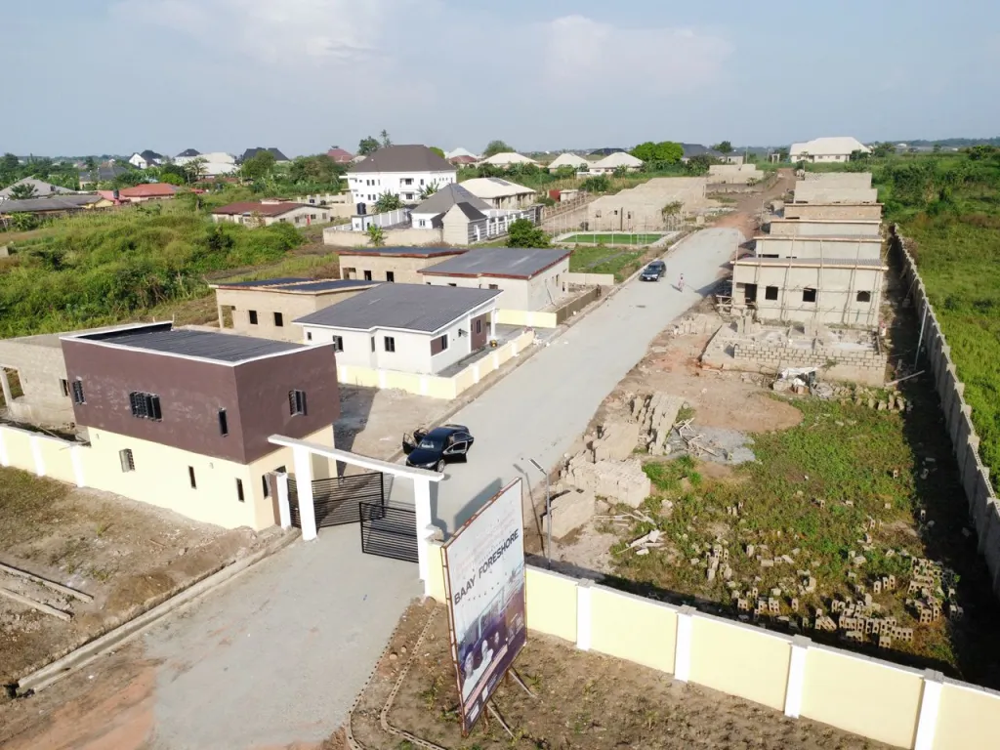
Capital range: Entry-level: New developments offer 2–3BR bungalows for ₦30–50M (with government backing). For example, Baay Foreshore Ibadan: 2-3BR bungalows at ₦38.5M (with ₦5M deposit). Land plots in peri-urban estates are even cheaper (see below). Overall, investors can start with <₦10M in this market via land/co-own deals, and homes for ₦20M+.
Holding period and risk: Ibadan is considered lower-risk for long-term growth. Urbanization and infrastructure (airport, highways) fuel capital appreciation. A 5–7 year hold is reasonable; short-term flipping is riskier (market is still maturing). Rental management is straightforward (the tenant pool is locals and students), but one must consider local rent controls (where rents are contractually annual).
Investor profile: Ideal for entry-level or budget investors. Young investors and Nigerians Abroad (looking for high yields on moderate budgets) are drawn here. The market is less liquid than Lagos but offers higher percentage returns for given rent. Suitable for “buy-to-rent” strategies or land banking.
Example Listings (Ibadan): • Baay Foreshore, Ajoda New Town (Ibadan) – Oyo State–sponsored estate with 2–3BR bungalows for ₦38,500,000.
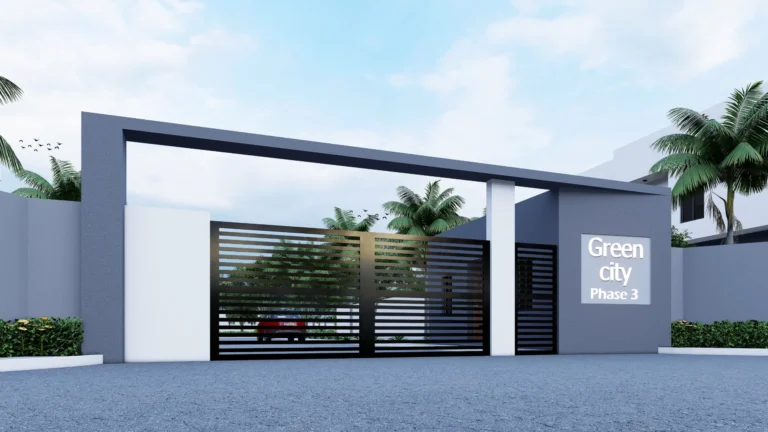
• GreenCity Estate, Moniya-Akinyele (Ibadan) – 500 sqm land plots at ₦2,900,000 (pre-launch pricing). These illustrate that even with ₦5–30M, investors can begin in Ibadan’s market.
Kano ROI Analysis (Emerging Market)
Overview: Kano is Northern Nigeria’s commercial hub (~4M pop). Land and housing prices are generally lower than the South; yet, urban demand is growing. Average Kano home price is in the ₦10–30M range (far below Lagos/Abuja). Key neighborhoods include Badawa, GRA/Nassarawa, Hotoro, etc.
Rental yields: Kano’s housing yields are decent for Nigeria. AfricanVestor found an average ~7.7% gross rental yield. (For example, 2BR flat at ₦28M with ₦146k/mo rent is 7.5%; some GRA flats even ~9.2%.) These yields exceed typical Abuja/PH returns. Kano’s yields are boosted by low purchase prices and modest rents, though net yields fall to ~5–6% after costs.
Capital range: Wide options: 1–2BR flats often ₦10–25M; a modest bungalow may be ₦30–50M. The AfricanVestor Kano table shows, e.g., 2BR in Badawa ~₦22M. Investors can start for even <₦10M with mini-flats. (Kano also has a significant used house market at lower prices than new estates.)
Holding period and risk: Kano is relatively stable; non-oil economy. Investors should target 5+ years for appreciation as the city grows. Risks include regional security issues (if any) and slower turnover (properties in “deep suburbs” may be harder to re-sell quickly). Vacancies and vacancy risk are lower than PH (less tied to oil), but still present if poorly located.
Investor profile: Good for buyers seeking yields on lower capital. Kano appeals to local entrepreneurs and diaspora looking for “value” markets. Often suitable for long-term residential rentals. The AfricanVestor advise is to favor small flats (1–2BR) in emerging but stable neighborhoods.
Example Listings (Kano): No BaayRealty listings are available for Kano. (In practice, investors monitor local estate agents. The average Kano yields (~7–8%) are competitive for Nigeria, e.g. 1BR flats ~7–8%.)
Comparative Summary Table
| City | Typical Price Range | Gross Yield | Holding Period | Investor Profile |
|---|---|---|---|---|
| Lagos | ₦30M–₦300M (avg ~₦70M) | ~8–12% (1–2BR); up to 15% in short-lets | Long (5–10+ yrs) | High-net-worth (diaspora, corporates) |
| Abuja | ₦20M–₦100M (avg ~₦50M) | ~5–7% | Long (5+ yrs) | Moderate investors (govt/employees) |
| Port Harcourt | ₦20M–₦80M | ~5–6% | Medium (3–5 yrs) | Specialists (oil expat landlords) |
| Ibadan (emerging) | ₦10M–₦50M | ~8–10% | Medium (5+ yrs) | Entry-level (students, first-time) |
| Kano (emerging) | ₦5M–₦30M | ~7–8% (avg 7.7%) | Medium (5+ yrs) | Value investors, local buyers |
Notes: Price ranges are typical purchase budgets. Yields are gross (pre-costs). Abuja yields exclude premium estates (Maitama’s ~7%). Ibadan is noted for “entry-level investors” and student rentals. Holding periods reflect growth horizons. Investor profiles are indicative based on tenant types and capital.
Recommendations by Capital Tier
- Low Capital (₦5–20M): Focus on “value” markets. Ibadan and Kano top the list – here you can buy multi-unit bungalows or small flats with yields near 8–10%. For example, a ₦10–20M investment in an Ibadan apartment or Kano flat can secure ~8–10% yield. Lagos outskirt land (like GreenCity Phase 3, ₦3–4M plots) or co-ownership schemes let low-budget investors enter Lagos.
- Medium Capital (₦20–100M): Go for balanced growth and income. Abuja estates (e.g. Gwarinpa) and Lagos mainland (Surulere, Lekki Phase 1) offer reliable rents (6–10%). For instance, a ₦50M Lagos 2BR in Yaba rents for ~₦0.42M/mo (10% yield). Ibadan parcels (₦30–50M bungalows) also deliver strong yields at this level. Medium investors should also consider Kano flats (₦15–30M) for ~7–8% returns.
- High Capital (₦100M+): Target premium assets and capital gains. Lagos premium (Ikoyi, VI, Banana Island) is a candidate – albeit yields here are lower (~4–7%), but capital appreciation is strong. Abuja Maitama can yield ~6–7%. Prime Port Harcourt GRA units (fully serviced, company-leased) may yield ~5–6% but offer corporate tenants. High-budget investors can also land-bank in Lagos corridors (e.g. Ibeju-Lekki) for huge upside in 5–10 years. At this tier, consider REITs or commercial properties (warehouses, offices) for portfolio diversification as well.
Conclusion
Nigeria’s top property markets each offer distinct ROI profiles. Lagos remains king of capital appreciation, with robust rental demand (especially for small apartments and short-lets). Ibadan emerges as a high-yield value market. Abuja and Port Harcourt are lower-yield, stable-income markets tied to government and oil sectors. Kano exemplifies a Northern market where low prices still fetch ~7–8% yields. Investors should match their capital and risk tolerance to the right city:
- <₦20M: Consider Ibadan, Kano, or small Lagos land/co-owns for double-digit yields.
- ₦20–100M: Look at mid-tier Lagos/Abuja rentals or large Ibadan homes for steady ~8–10% yields (and good appreciation potential).
- >₦100M: Opt for luxury Lagos/Abuja or land investments where growth (not just rent) dominates.
Ultimately, diversification is key: mix high-yield secondary assets with one premium flagship property. Regardless of choice, verify titles and use trusted agents. As Baay Realty emphasizes, Nigeria’s boom is data-driven – use up-to-date market intel and vetted listings (such as those above) to maximize ROI.