Real Estate Trends Nigeria 2026: The Critical Shift Reshaping Property Investment
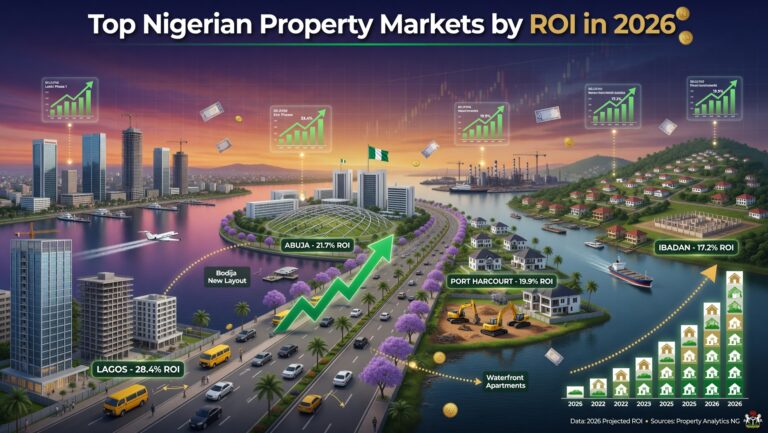
Nigeria’s property market is surging into 2026, with experts projecting average price growth on the order of 10–12% (roughly 5–15% across scenarios). This momentum comes even amid high inflation and interest rates, because chronic housing shortfalls and strong demand (including diaspora investment) keep values rising. In practical terms, buyers face steeper prices: prime Lagos or Abuja plots are climbing sharply, and rents are jumping city-wide. For example, mid-range Lagos two-bedroom rents are forecast up ~28% in 2026 (from ₦2.5M to ₦3.2M), Abuja prime rents ~25% higher, and even secondary cities like Ibadan are seeing ~50% rent increases as commuters spill over from expensive Lagos. In this fast-moving market, “affordability migration” is underway: many Nigerians are looking beyond core urban centers to more affordable satellite towns (see below) to cope with the price surge.
Digital Innovation and PropTech
Real estate in Nigeria is undergoing a digital transformation that is changing how people buy, rent and invest.
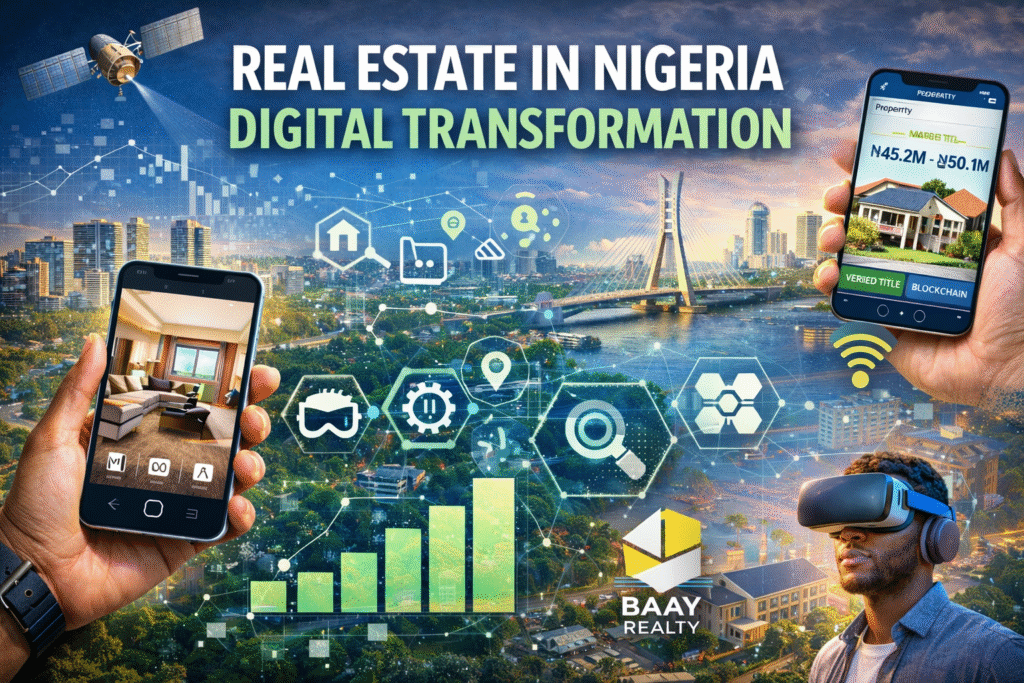
Technologies like 3D virtual tours, blockchain and AI are rapidly moving from novelty to norm. Virtual-property walk‑throughs (360° tours and drone flyovers) let buyers – including Nigerians abroad – inspect homes remotely, cutting down costly site visits. Blockchain-based land registries and smart-contract platforms are emerging to stamp out title fraud: they create tamper‑proof, transparent records of ownership and automate sales. And AI-powered analytics and valuation engines can crunch market data to suggest optimal prices or match tenants to ideal apartments. As one PropTech expert explains, these tools “offer solutions to long‑standing problems, including land scams, excessive site visits, inflated pricing,” and are quickly becoming “the new standard” for Nigerians – especially younger buyers and the diaspora.
- Virtual Tours: 360° images and 3D walkthroughs let people “experience” a home from afar. Platforms in Lagos and Abuja now routinely offer virtual viewings via web or mobile apps, saving time and giving confidence to overseas investors.
- Blockchain Title Checks: Decentralized ledgers can lock in immutable land records. Nigerian startups and even Lagos State authorities are piloting blockchain land registries so that sales and ownership changes are public and fraud‑proof.
- AI Valuations: Machine‑learning models analyze prices, local amenities and demand to recommend listing prices or identify hot investment zones. Early AI tools in Nigeria are already matching renters to listings and flagging underpriced deals.
Together, these PropTech advances make transactions faster, more transparent and more reliable. For Nigerians who traditionally feared opaque land deals or lengthy paperwork, the tech shift is the critical change for 2026 – enabling buyers and renters to make smarter decisions in a booming market.
Prices, Forecasts and Rental Trends
The result of these market forces (high demand, inflation and PropTech) is visible in price indices. National forecasts point to roughly +10–12% growth in property values for 2026 on average. In prime urban pockets – gated estates or downtown high‑ends – gains may hit 15–20%, while in outer suburbs or smaller cities the rise may be more modest (8–12%). In fact, different analysts project a range from only ~5% on the low end (if inflation spikes) up to ~18% if currency and costs stabilize.

- Rent Escalation: Rents are climbing fastest in Lagos and Abuja. For instance, middle-income Lagos areas (Yaba, Surulere) see two-bedroom leases rise ~28% from 2025 to 2026. Abuja’s central districts also jump ~25%, but critically its satellite town submarkets (Kubwa, Lugbe) are “squeezing” with rapid hikes as new highways make these areas accessible.
- Overflow Cities: Cities outside the megacities are catching spillover demand. Ibadan, for example, now benefits from the Lagos–Ibadan express rail: professionals commute to Lagos but live in Ibadan, pushing local rents up nearly 50% in hot neighborhoods. Meanwhile Port Harcourt sees growth from oil sector jobs, and emerging hubs like Enugu and Uyo offer modern living at ~40% of Lagos rents.
This means many ordinary Nigerians can no longer afford central-city homes – driving them to secondary markets and satellites. New suburbs and satellite towns (like Ibeju‑Lekki outside Lagos, and Gwagwalada outside Abuja) are being touted as the “next goldmines” for affordable land. These outlying areas feature much lower entry prices (often ₦800k–2M per plot vs. tens of millions inside the city), yet are rapidly getting utilities and roads. Infrastructure booms are key: the new Lagos–Calabar coastal highway is already boosting nearby land prices 25–40%, and planned rail lines and ports are similarly creating growth corridors. In short, urban expansion is the 2026 theme – and it’s both raising values and opening new investment frontiers.
Satellite Town Growth and Infrastructure
Nigeria’s cities are physically sprawling outward. Faced with overpopulation and heavy traffic, the government and private developers are turning to satellite town development.
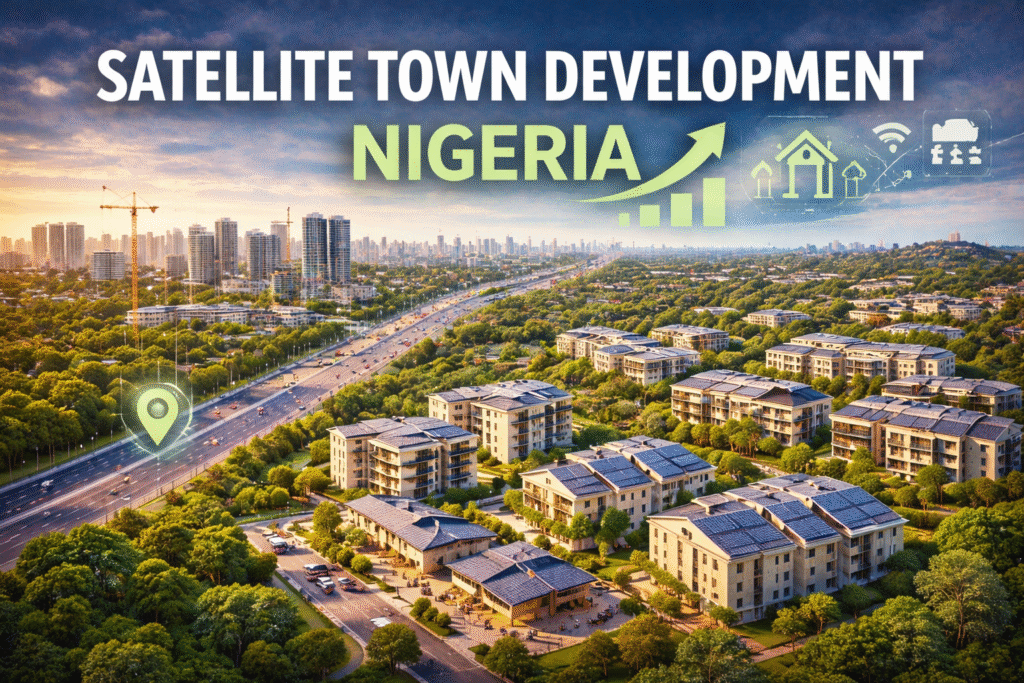
Major new townships and estates are popping up outside traditional cores, backed by roads, bridges and utilities. Investors note that areas like Kuje (Abuja), Ibeju‑Lekki (Lagos), and Adiriwi Ogegi (Port Harcourt) were once rural, but are now witnessing malls, schools and estates being built quickly. Many plots that once cost under ₦1 million are projected to multiply as infrastructure completes.
Key points:
- Satellite town homebuyers gain lower costs with upside: Land on a city fringe might cost ~₦1–2M now but could rise 5–10× in a few years.
- Infrastructure-driven growth: Projects like the Lekki Deep Sea Port, Dangote Refinery, Lagos urban rails and coastal highways are all targeted at these corridors. For example, properties within 5 km of the new Lagos–Calabar Highway have already jumped 25–40%. As roads, rails or power lines arrive, formerly sleepy towns quickly become viable bedroom communities.
For renters, the trend is already clear: Lagos “mainland” districts (Ikeja, Magodo) saw ~30% rent jumps as people fled the expensive Island. In Abuja, policymakers even warn of a “Satellite Town Squeeze” as prices jump in Kubwa and Lugbe. Buyers who bank on infrastructure can score big returns – a classic case of urban expansion turning outskirt land into tomorrow’s city property.
Sustainable Housing and Baay Realty
Amid the growth frenzy, sustainable and affordable housing is emerging as a focus for some developers and policymakers. Nationwide, the housing shortfall and high costs have led to calls for greener, lower-cost building. In practice, this means things like energy-efficient homes, master-planned estates with solar power, and eco‑friendly materials – trends still nascent but gaining attention. One prominent example is BAAY Projects (through Baay Realty): this firm explicitly brands itself around innovation, affordability and sustainability. As the Guardian notes, “BAAY Projects continues to set new benchmarks in construction and real estate excellence” with a focus on those values. Its real estate arm, Baay Realty, describes its mission as creating “modern, sustainable, and affordable living spaces” for Nigerians.
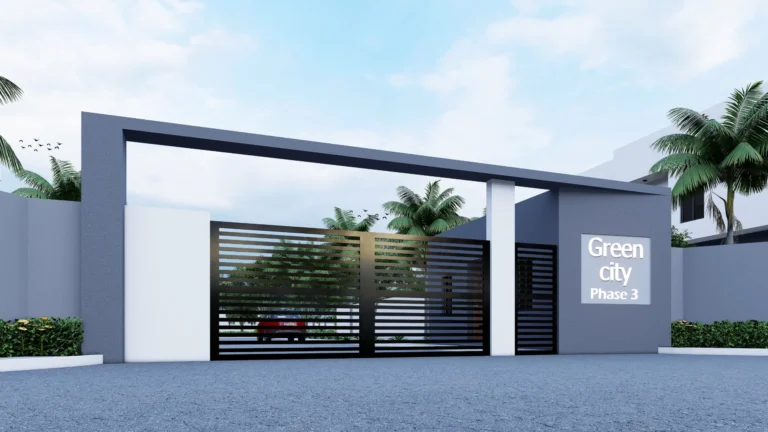
Baay’s projects illustrate the trend. For example, the Baay Foreshore estate in Ibadan (in collaboration with Oyo State government) was designed to blend affordability with modern living. In Lagos, Baay is developing multi‑bedroom apartments (e.g. Atlantic View’s Pacific Apartment project) and lower‑income estates (Green City Phase I in Ketu‑Epe) aimed at different income levels. These projects often include standard features like borehole water, energy backup and ample green space. While sustainability-minded projects are still limited, local developers like Baay are highlighting that building well-managed, eco-friendly estates can meet the needs of a price‑conscious market.
Looking broadly, Nigeria is also starting to explore green building codes and renewable energy for homes – from solar street lights in new cities to energy‑efficient house designs – though uptake is early. Still, with electricity costs high, any durable housing solution will need integrated power (solar/gas) and modern management. In fact, Nigerians now often pay a premium for “serviced” apartments with their own power source. Sustainable housing is thus tied to affordability in practice: efficient, well‑managed buildings are more desirable and can help control operating costs for tenants and owners alike.
Critical Shift: Technology Meets a Hot Market
The one critical shift reshaping Nigeria’s 2026 real estate landscape is this digital empowerment. As prices climb and suburbs expand, it is the rise of PropTech and data-driven tools that fundamentally changes how people engage with property. Virtual tours, AI-driven valuation engines, and blockchain title checks are not just buzzwords – they are lowering friction in every deal. By enabling Nigerians (home and abroad) to browse listings online, verify documents digitally, and analyze market trends algorithmically, these innovations are making the market more efficient and transparent.
In practical terms, a buyer can tour multiple homes in Lagos or Abuja via VR and compare prices with AI‑powered estimates, all from a smartphone. A renter can lock in a multi-year lease with confidence after seeing a 3D walkthrough. A property investor can verify title records on a blockchain before committing. This shift matters because it complements the other trends: it helps balance out rapid price hikes and decentralization by giving consumers more information and choice.
In sum, Nigeria’s 2026 real estate market is in flux – booming yet complicated – but the PropTech revolution is the game‑changer pulling it together. Those who embrace these tools stand to navigate the market wisely, while those who don’t may be left behind. As one industry expert put it, ignoring virtual tours and digital valuations in today’s Nigeria “could leave you behind” in the next wave of property development.
Sources: Recent industry analyses and market reports (Nigeria Housing Market, Edabor Media, Africanvestor) as well as expert commentary on PropTech and local developer initiatives were used. Notable references include forecasts of ~12% price growth in 2026, Nigeria Housing Market’s rental data, and industry statements from BAAY Projects and PropTech bloggers. These show how digital innovation, pricing pressures, and infrastructure together are driving Nigeria’s real estate evolution.